Contents (14 sections)
Introduction
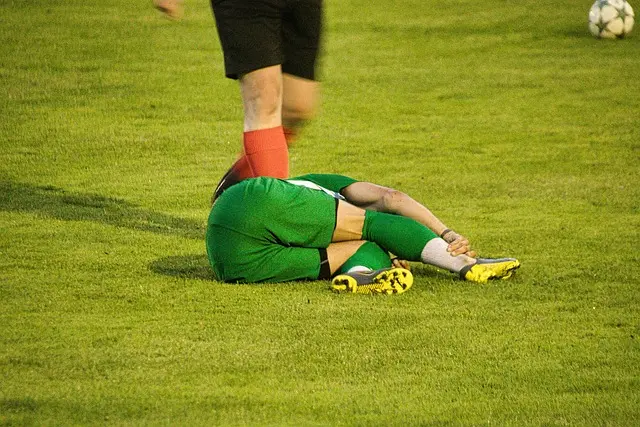
Football, a sport cherished globally, demands peak physical performance. However, the risk of injury remains significant. To understand these injuries, one must explore the science behind them. Football injuries science examines the complex interplay between biomechanics, physiology, and environmental factors.
The Biomechanics of Football Injuries
Each movement in football involves intricate biomechanics. Sudden stops, rapid acceleration, and sharp turns put immense strain on joints and muscles. Studies indicate that anterior cruciate ligament (ACL) injuries are prevalent in football due to sudden pivoting (Source: FIFA). Understanding these mechanics aids in designing training that minimises risk.
The Role of Muscle Fatigue
Muscle fatigue is a crucial factor. As matches progress, players experience a decline in muscle efficiency, increasing injury risk. Research indicates that fatigue impairs neuromuscular control, elevating the likelihood of strains and sprains.
Common Injuries and Their Causes
Understanding common football injuries—such as sprains, fractures, and concussions—requires examining the circumstances leading to them. For example, high-impact collisions often result in concussions. Concussions account for approximately 7.4% of injuries in professional football.
Sprains and Strains
Sprains and strains are largely due to overextension or tearing of ligaments and muscles. They frequently occur in the ankle due to the uneven surfaces on which football is often played.
Prevention Techniques
Preventative strategies are imperative for reducing injury incidence. Implementing proper warm-up routines and ensuring adequate hydration can significantly decrease injury risks. The Federation Internationale de Football Association (FIFA) provides guidelines for injury prevention which include agility and balance exercises.
📺 Resource Video
> 📺 For further insights: Preventing Football Injuries: Expert Tips, explore comprehensive strategies for injury prevention. Search YouTube: "football injury prevention 2026"
Expert Advice
> 💡 Expert Opinion: Studies suggest a combination of strength training and dynamic stretching as crucial for reducing injury. Dr. James Kerr, a leading sports scientist, emphasizes that tailored exercise regimens based on individual athlete assessments produce superior results.
Comparative Data on Injury Rates
Given football's physical demands, injury rates can vary between levels of play. A table illustrating the injury rates offers a comparative look:
| Injury Type | Professional Level | Amateur Level | School Level | Verdict |
|---|---|---|---|---|
| ACL Tear | High | Moderate | Low | Prevalent in professional play |
| Concussion | Moderate | Moderate | High | Significant across all levels |
| Ankle Sprain | High | High | High | Common at all levels |
- What are the most common football injuries?
Injuries like ACL tears, concussions, and ankle sprains are frequent.
- How can players reduce the risk of injury?
Proper training, warm-up routines, and using the right equipment are crucial.
- Why do concussions occur in football?
High-impact collisions and headers often result in concussions.
- Is professional football more prone to injuries than amateur levels?
Professional play often results in higher injury severity due to increased physical demands.
Checklist for Football Injury Prevention
- [ ] Perform dynamic stretching before matches
- [ ] Incorporate strength training into weekly routine
- [ ] Ensure proper hydration before, during, and after play
- [ ] Use appropriate footwear for pitch conditions
- [ ] Follow a balanced nutrition plan to maintain health
Glossary
| Term | Definition |
|---|---|
| Biomechanics | The study of structure, function, and motion of biological systems. |
| ACL | Anterior cruciate ligament, crucial for knee stability. |
| Concussion | A brain injury caused by a blow to the head or body. |
Conclusion
Understanding the science behind football injuries is essential for developing effective prevention strategies. By integrating biomechanical insights, players and coaches can significantly reduce injury risk, ensuring the sport remains enjoyable and safe.